
Friday, October 15, 2010

Wednesday, October 6, 2010
Journal Notes P. 102-113
 |
| photo from here Formal portraits are teh simplest portrait photography style and should place an emphasis on the person and nothing else. To achive this the person should be placed in front of a neutral background. Portraits can be taken at ranges varying from up-close to full-length views. |
 |
| Photo from here This photo demonstrates value in portrait photography. The use of light to highlight and create shadows on your subject. The change in light can create a mood, ie: shadows create a dark and melancholy mood, while light creates an upbeat and lively atmoshpere in the image.  |
Monday, October 4, 2010
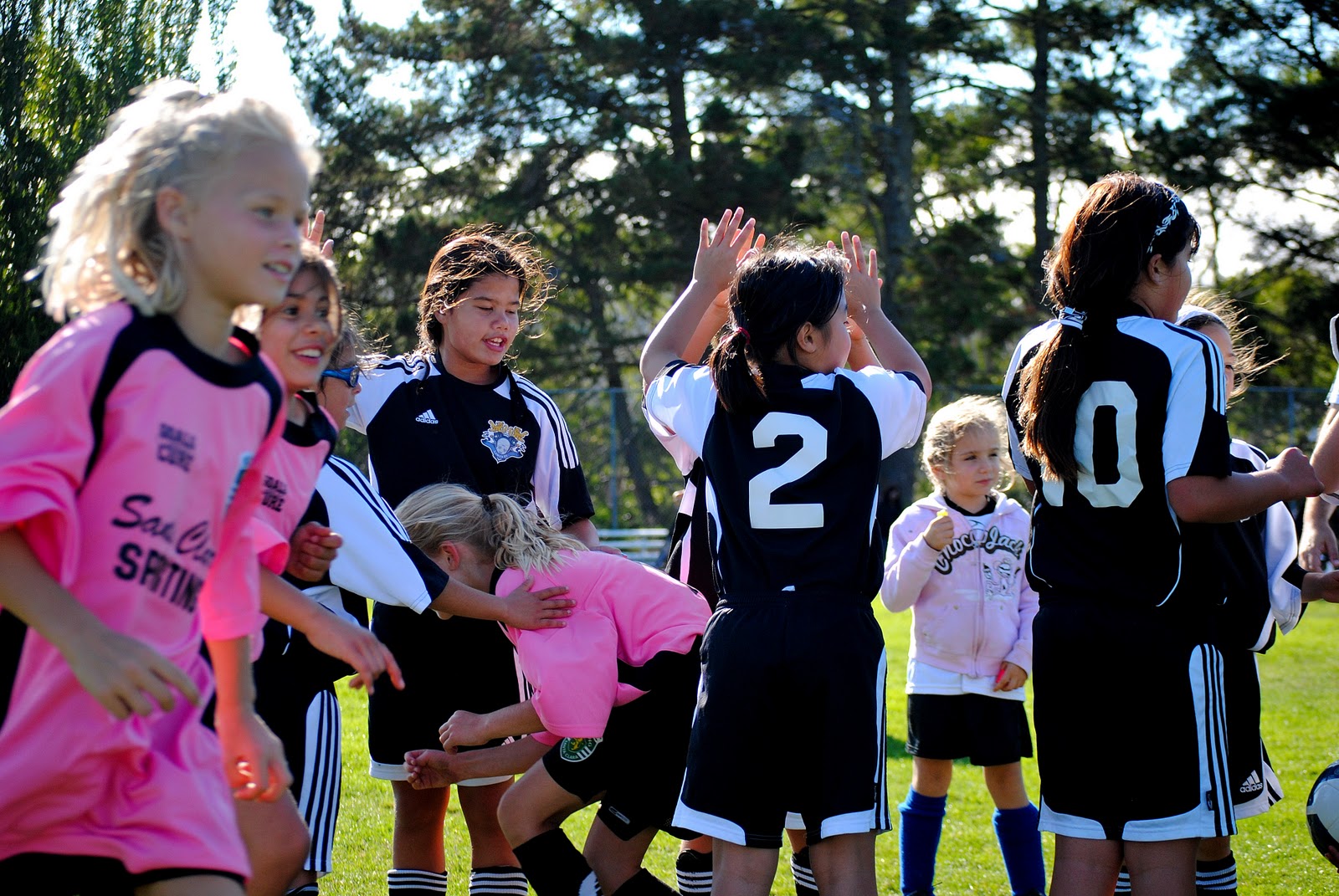
Photo Essay on Soccer
 |
| Black showing good sportsmanship and congratulating pink on their win. |
 |
| Celebrating a goal. |
 |
| Upset after a goal was scored against her team. |
 |
 |
 |
| Getting ready to start the game. |
 |
| A coach giving private instruction before a game. |
 |
| A team being lectured before a game. |
Thursday, September 30, 2010
Portrait Photography
Diane Arbus
Diane Arbus is known for her portraits of people who live on the fringes of society, as wll as her ability to take capture ordinary people in extraordinary poses and settings. She is notorious for pushing the boundaries of "tasteful" portrait photography. She took the majority of her pictures in black and white. In 1946, with her husband, she opened a commercial photography business called Diane & Allan Arbus. Her husband was the photographer, while she was the art director. She quit the commercial photography business in 1955 and began to take pictures for magazines such as Esquire and The Sunday Times Magazine. In 1963 Diane was awarded a Guggenheim Fellowship for a project on "American rites, manners and customs."
An archive of her photographs can be found here
Wednesday, September 29, 2010
Notes on Photojournalism
Photojournalism:
Qualities one needs for this Career:
Are you taking only photos?
Qualities one needs for this Career:
- A desire to be “out in the world” (Travelling, etc)
- Technical proficiency (Must be able to handle technology and know what you are doing)
- Understanding of and a commitment to ethical standards (Don’t manipulate or lie in a photo)
- Persistence ( a drive to get the story)
- “The debate about whether or not a photographer needs a formal education goes back as far as the invention of photography. The best suggestion is for students to look at all the options and then choose the path that works for them.” (From Article)
- Ways to Go:
- Self-Taught
- A major in Photography
- A college Education
Are you taking only photos?
- The answer is NO! One must be able to take video and other multimedia mediums.
- Pretty Important, you have to be able to sell yourself and your product to the market.
- War is very expensive, but can be fruitful for a photographer’s career.
- Mind you, it is very hard to get into warring countries, though, and often you must have a major organization backing you and your trip.
- The answer is…most likely not.
- People go into photography because they love it, not to make money
- The real compensation is your work, and the experiences you gain (Cheesy, right?)
- Seek to have the widest possible skill set. (This includes work with a still camera, computer, audio and video tools. Be as complete a storyteller as possible with the range of tools available. )
- Special enhancements are equally valuable
- Learn to write stories and proposals; learn one or more foreign languages; learn to compose music, an especially valuable skill as one moves into the multimedia and video world.
- Storytellers should keep in mind they will be studying at least three topics as long as they pursue this career:
- New technological developments
- The process of telling a story that communicates clearly
- The copyright law. These are subjects that become the ordinary, on-going “homework” of the working professional.
- Most likely creative people will have several if not many jobs over the course of their career.
Tuesday, September 28, 2010


Tuesday, September 14, 2010
5 Photojournalism Pictures
 |
| Photo by: Franco Pagetti This photo depicts a young man who was a former child soldier for the RUF. He is emotionally, and as is shown in the picture, physically scared. The punishment for trying to abandon your troop was being branded. The framing of this picture makes the viewers main focus the person depicted as well as the wounds that he has incurred. The photo evokes emotions like sympathy and horror from the viewer. It is never easy to see a human being treated like an animal, by being branded. |
 |
| Photo by: Jan Grarup This photo shows young boys being trained to be soldiers. They have be handed weapons, at an extremely young age and have had their lives mapped out for them. The photographer framed the picture so that the viewer is able to see the boys marching, but also a rock wall with a gun poised on top. It foreshadows what these children will grow to do. The picture sets a very foreboding mood and a scene of desolation, in light of the lives these boys will lead. It is shocking a shocking picture to encounter. Photos above from here. |
 |
| Photo by: Stephen Wright This photo is of a homeless woman playing a whistle type instrument and her dog. The framing shows you the conditions which the women lives in. The photo emphasizes teh woman by placing her in the third quadrant of the frame. Her dog almost blends into the blanket, but it adds to the whole effect of the photo. The image evokes sympathy for those less fortunate than oursleves and it carries sad undertones for the conditions people are forced to live under. Photo above from here. |
 |
| Photo by: Philip Jones Griffiths This photo shows a woman lying dead, while a soldier crouches over her and two people walk by like there is nothing out of the ordinary going on. It emphazises the violence these people live with and how they expect it in their everyday lives. The framing gives space to each of the different people who make up a different component of the picture. The dead woman, the soldier who could have possibly killed her, and the two passerbys who go on indifferently. The mood is depressing; seeing the horrors people come to think of as normal is astounding. Photo above from here. |
 |
| Photo by: Don McCullen This photo portrays children who are starved and because of their lack of food have basically become skin and bones. The child in the back has had so little to eat that his stomach muscles have undergone atrophy and his stomach has become distended. The picture is famed so that the viewer can see multiple children in the photo who are suffering from malnutriotion. It emphasizes the harrowing scenarios people live with. There is a very depressing mood set; seeing children with so little to eat, when you see people stuff themselves with food on a daily basis. Photo above from here. |
Subscribe to:
Posts (Atom)